11.16.2009

Truth or Dare? (Media Meditation Six)


As we've learned in class real, honest news is often hard to come by, especially since 80 percent of news is actually advertising in disguise. Instead of looking at one particular news corporation I decided to give the news in general a brief overview, and I say brief only because there is so much to look at it would be nearly impossible.

The reasons and ways behind the transformation of news from newsprint to online sources is what interests me most. "Because of their local monopoly status, many newspapers were slower than other media to confront the challenges of the electronic and digital revolution.... While some observers think newspapers are on the verge of extinction as the digital age eclipses the print era, the industry is no dinosaur. In fact, the history of communication demonstrates that older mass media have always adapted"(274).

This may not be a bad thing, now with unlimited space, online newspapers can post articles that otherwise wouldn't make the cut for the simple fact there wasn't enough room in the print version. However, this must be taken with a grain of salt due to the onslaught of the "blogosphere". The Discursive shift, reminds one that with the ability to post news online comes the possibility that certain sources might not be as reliable as others.

Now online sources such as The New York Times is able to include video along with articles. Creating a technological shift that combines newspapers with the Internet. Almost as good a combination as a peanut butter and jelly sandwich.

410w.jpg


The most important part of having easy accessible news is remembering that since it is mainstream most of it has been shaped by ownership, advertising, the news makers and shapes, and finally flak. So what is easy to find might not always be reliable, it is usually the thing that takes the most time to find holds the most truth.

Video News Release:

An Apple a Day Keeps the Doctor Away (Media Meditation Five)


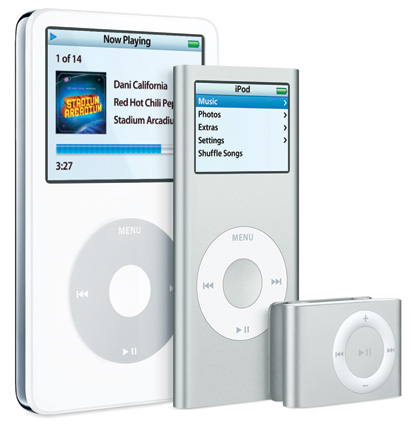
From tape players to ipods, cassettes to mp3 files, and burning CDs to Limewire, music technology has made a great leap in the last decade. Out of all the recently developed technology "Apple's iPod [is] the leading portable music and video player" which "began a revolution in digital music"(79).

Now, anyone who has an iPod can download music, podcasts, games, and videos to watch/listen to at any time.

Out of the triune brian, iPods effect the limbic system for two main reasons:

1. The most obvious is how music effects the limbic brain. Since the limbic system supports a variety of functions including emotion, behavior, and long term memory it responds quite strongly to music.

brain-limbic.jpg


2. The second way is how Apple is able to market the iPod and its components. The flashy, bold colors and print draw the eye into advertisements. The branding of the Apple icon is also key to creating a popular brand that is recognizable.

ipod_ads_2.jpg


The reality construction/trade-off of the iPod is that their advertisements excludes people who own PCs. Only recently did Apple begin adding in that iPods were compatible with PC and other non-Mac computers. However, there is still a great deal of company rivalry between Mac and PC. I must say that Mac is doing a much better job of using 29 T.O.P.s to further their company, some of which are name calling, humor, group dynamics, beautiful people, and bribery.


Opening Pandora's Box (Media Meditation Four)


One of the biggest influences on culture and society is music. With the recent advancements in media, the technology to share and download music has increased in demand.

"Over the past decade or so, four alternative radio technologies have helped bring more diverse sounds to listeners: the Internet, satellite, podcasts, and HD (digital) radio"(133). Programs such as Limewire, DC++, and ShakesPeer are allowing people to illegally download music, which is all good. However, if you're looking for good, clean fun Pandora is the place for you. Pandora, an internet radio website, is a online music source where users can create playlists, share ideas, and connect with other music lovers.

pandora.jpg


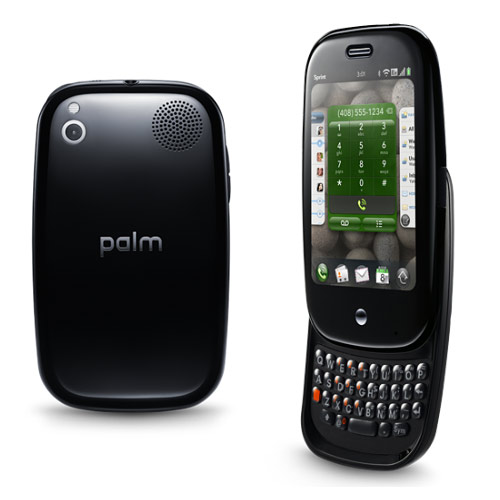
Not only is Pandora an example of a personal shift, because it is a combination of a social network and a music sharing website, but it is also an aesthetic shift. This is because along with being accessible from a computer, Pandora is also available for download on multiple cell phones such as, BlackBerry, iPhone, Palm Pre, and Windows Mobile.

In 2007 a sound-exchange was requested and agreed to by a federal panel that said each song played on a Web radio station would be doubled in order to pay performers and record companies. So even though there are multiple owners, i.e. Pandora Music, Inc. as well as each individual artist and their record companies, each were receiving payment for their services.

11.12.2009

Fo' Shizzle My... What?! (Media Meditation Three)


Language is always evolving in order to keep up with popular culture and each new generation. Since the dictionary, while extremely useful, can be out dated at times Urban Dictionary is the perfect way to keep up with the ever changing vocabulary of today's youth.

For obvious reasons Urban Dictionary is a technological shift because it can be found online, unlike the original dictionaries that have to be purchased in hard cover. It is also an aesthetic shift because iTouch and iPhone users can purchase an Urban Dictionary application for on the go use.

Urban Dictionary is also personal shift because it is a link to multiple social networks, such as Facebook and Twitter, and users can also "add today's word to [their] rss reader" as well as the google calendar.

The reality constructs/trade-offs of Urban Dictionary are few, but vital. First, is its user defined content. While Urban Dictionary is regulated at two levels, a user must not forget that the information they are seeking is most likely a perception of someone else and not necessarily a fact. Much of Urban Dictionary depends on the views of others. For example the two levels which regulate the dictionary's definitions are, users vote to accept or reject new definitions and definitions can be voted "up" or "down" by any viewer. Therefore a particular fact that is not extremely interesting, yet an important piece of information, may be located at the bottom of the page where most users don't bother to look, so certain information is being hidden or even absent.

The fact that such a large portion of the book industry is based off of reference books makes me wonder how large the online industry of books can get, since "[t]he two most common reference books are encyclopedias and dictionaries"(326). Will online sources eventually take over the written word, and will they be as reliable?

11.11.2009

Found While Stumbling

Just found this after I finished the post about Stumble Upon and wanted to share it with everyone.

Enjoy!

11.10.2009

Caution: Tripping Hazard (Media Meditation Two)


Stumbling: "the act of bopping haphazardly around the internet", take this one step further and you have Stumble Upon the newest way to stay entertained. Known as an "internet community" or a "personalized recommendation engine", Stumble Upon allows it's users to discover and rate related web pages on a social network.

Stumble Upon is a perfect example of a personal shift because it's a collection of personal webpages which can be accessed through a single site. It takes surfing the internet to the next level because Stumble Upon is not only a search engine but a social network. You can post comments, bookmark your favorite sites, and even e-mail friends with pages you think they'd like.

It's also an example of an aesthetic shift because, after searching iTunes I found audio and video podcasts that you could download instead of using the website. So if you're on the go or unable to use your computer you can watch a video or listen to a podcast on your iPod, iTouch, or iPhone about any one of the numerous random stories Stumble Upon chooses to publish.

Besides being an entertainment device, Stumble Upon makes surfing the web easier because you can limit your searches based on categories. Made possible by the Stumble Upon toolbar users can shape their content by selecting the "like" or "dislike" buttons. Not only is Stumble Upon a social network in and of itself, but it allows its users to connect to other networks such as Facebook and Twitter through use of the icons on its toolbar. Along with the social network trafficking you can also share webpages with friends via e-mail.

Without the "innovation of digital communication... [which makes] media convergence possible because it enables all media content to be created in the same basic way" (51) Stumble Upon, along with other online sites, wouldn't be able to exist.

Stumble Upon houses sites from:


lifewarvietnam.jpg


to...


to...


ibook.jpg

11.09.2009

Domo Arigato Mr. Roboto (Media Meditation One)


Recently I stumbled upon a somewhat new site that enables you to update your blogs, facebook, and twitter accounts from its homepage. While allowing you to publish mini video clips from your webcam or phone it also updates all your social networks at once.

Robo.to: publish once, update everywhere.

I found this site extremely intriguing because it's the pinnacle of media convergence. After all, we have learned that "[t]he hallmark of Web 2.0 is media convergence, the technological merging of content in different mass media" (51) and what medium is more in sync with this then the idea of a blog that allows you to update all your other social networks from your webcam or cell phone? I sure can't think of one.

Robo.to utilizes many of the eight trends, especially the personal and aesthetic shifts. Not only is Robo.to a blog, it is a blog that allows you to update any of your other online social networks. For obvious reasons this is appealing because it saves time and allows you to blog, tweet, and facebook all at once. This is made even easier by the ability to update video clips from your phone. Now you can "stay the heck outside!" because "Robo.to works oh-so-great on your phone."

It's sad to say that society needs a blog in order to keep track of all their other media, but if that's what it's come down to then I guess it's a good thing we have this device. While I've experimented with the Twitter and Facebook Mobile applications, I've found I much rather prefer keeping my online life online. However, for those who stay constantly connected with their online world this website is perfect. I took the liberty of testing it out and found that it's quite quick and easy to use, not to mention its convenience. Though be careful, this simple yet flashy website is becoming quite popular, you may not get out alive.

Robo.to explained: